
Why Is My Google Ads CPC So High? What’s Driving Up Your Cost Per Click

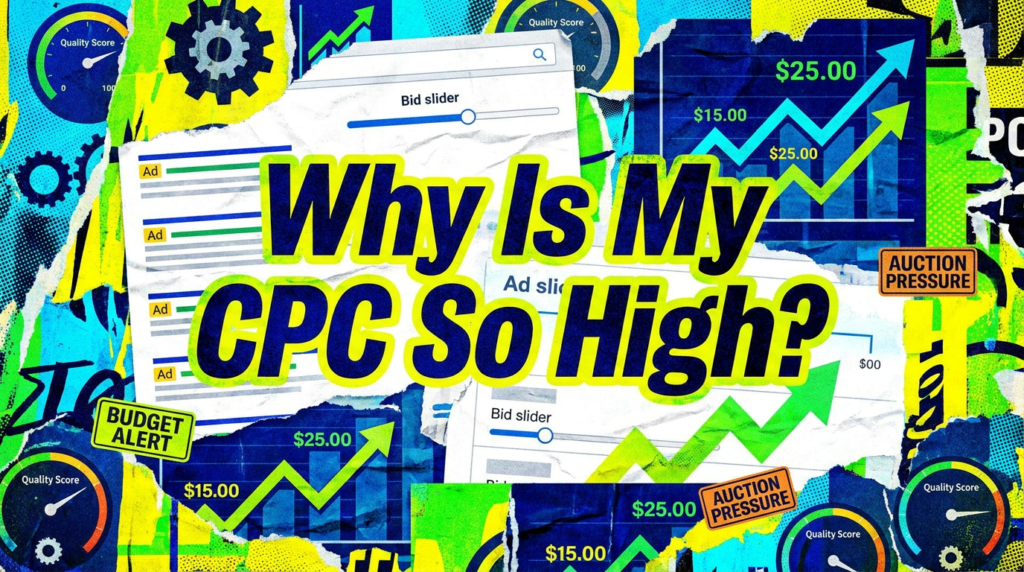
Your cost per click is set by an auction, not by Google’s price list. Here is what pushes it up, and which parts of it you can actually change.
Why is my Google Ads CPC so high is the question that usually lands the week after someone looks at their spend properly for the first time.
Clicks cost more than they did in March. The budget disappears faster. Nothing obvious changed.
Here is the part most people miss. You do not pay a price that Google sets. You pay a price that an auction sets, and your own account helps set it. Two businesses can bid the same amount on the same keyword and pay very different amounts per click.
That difference is not luck. It comes down to Quality Score, account structure, and how closely your ad matches what the person actually typed. Which means a high Google Ads CPC is rarely a competition problem. It is usually a relevance problem wearing a competition problem’s coat.
You can use this guide to work out which one you have. If you would rather someone opened the account and told you straight, we can do that.
Quick Version
If you only have 20 minutes, stop looking at your bids and start looking at what Google thinks of your ads.
A few things worth knowing:
- A £2 click means nothing until you know what a customer is worth to you.
- The Quality Score column stays hidden until you add it yourself.
- Component ratings tell you far more than the 1-10 number ever will.
- Landing page experience moves the most money and gets the least attention.
- Cutting your bid lowers your position, not necessarily your price.
- Match types and search terms decide which auctions you enter at all.
- New competitors and seasonality are real, and they are not your fault.
If you have never opened the Quality Score column, your Google Ads CPC is probably telling you something you have not heard yet.
Not Sure where to start?
Start with quality, not cost.
Open Google Ads, go to the Keywords tab, and add the Quality Score column. Most business owners have never done this, because Google does not show it by default.
Sort ascending. Look at what sits at the bottom with real impression volume behind it. Ignore anything with a handful of impressions, because there is not enough data there to mean anything.
That short list is your starting point. Not your bids. Not your budget. The keywords Google has quietly decided are a poor match for your ads and your website, and is charging you a premium to run anyway.
Our full Google Ads CPC guide
When someone asks why is my Google Ads CPC so high, they usually expect an answer about competitors. This is not a guide about panicking over one number. It is about working out whether you have a quality problem, a targeting problem, or a maths problem.
1. Your CPC is the output of a formula
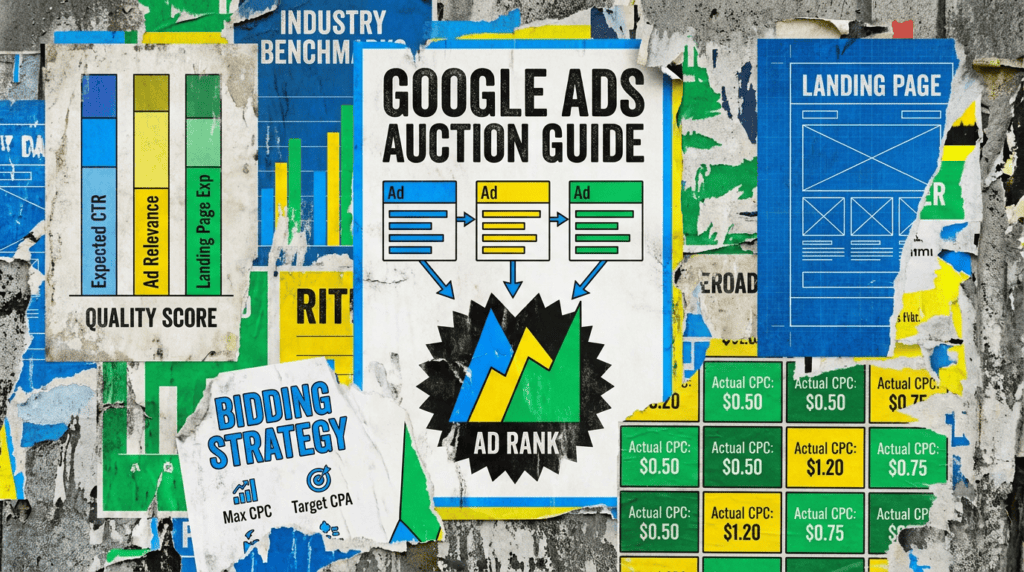
Google runs an auction every time someone searches. Where you appear depends on Ad Rank, which combines your bid with how good Google thinks your ad is, plus context like where the person is and what they typed.
Then Google decides what to charge you. It charges roughly what you needed to beat the advertiser directly below you, and your quality sits in the denominator of that sum. Better quality, smaller number.
So when your cost per click rises, one of a few things happened:
- Someone below you got better, and now costs more to beat.
- Your own quality slipped, so the same position costs you more.
- A new advertiser entered the auction with deeper pockets.
- The searches you match to changed, and the expensive ones now dominate.
- Your bid strategy started chasing a target it cannot hit cheaply.
Only some of that is yours to fix. Usefully, the parts you can fix are the parts that matter most.
2. Work out whether your CPC is genuinely high
A £2 click is expensive for an ecommerce store selling £15 candles. It is a bargain for a commercial roofer whose average job runs to £8,000.
Before you panic, do the sum that actually matters. Divide your Google Ads CPC by your conversion rate to get cost per lead. Divide that by your close rate to get cost per customer. Hold that against what a customer is worth to you over a year.
Healthy signs:
- Cost per customer sits comfortably below customer value.
- Expensive keywords bring the enquiries you actually want.
- Cheap clicks are not quietly dragging your close rate down.
Worrying signs:
- Nobody in the business can say what a customer is worth.
- Conversion tracking counts things that are not really conversions.
- The cheapest keywords produce the most time-wasting enquiries.
- Every decision gets made on cost per click alone.
Plenty of accounts we open have a “high” CPC and a perfectly healthy cost per customer. The owner has been worrying about the wrong number for six months.
3. Quality Score is where most of the money hides
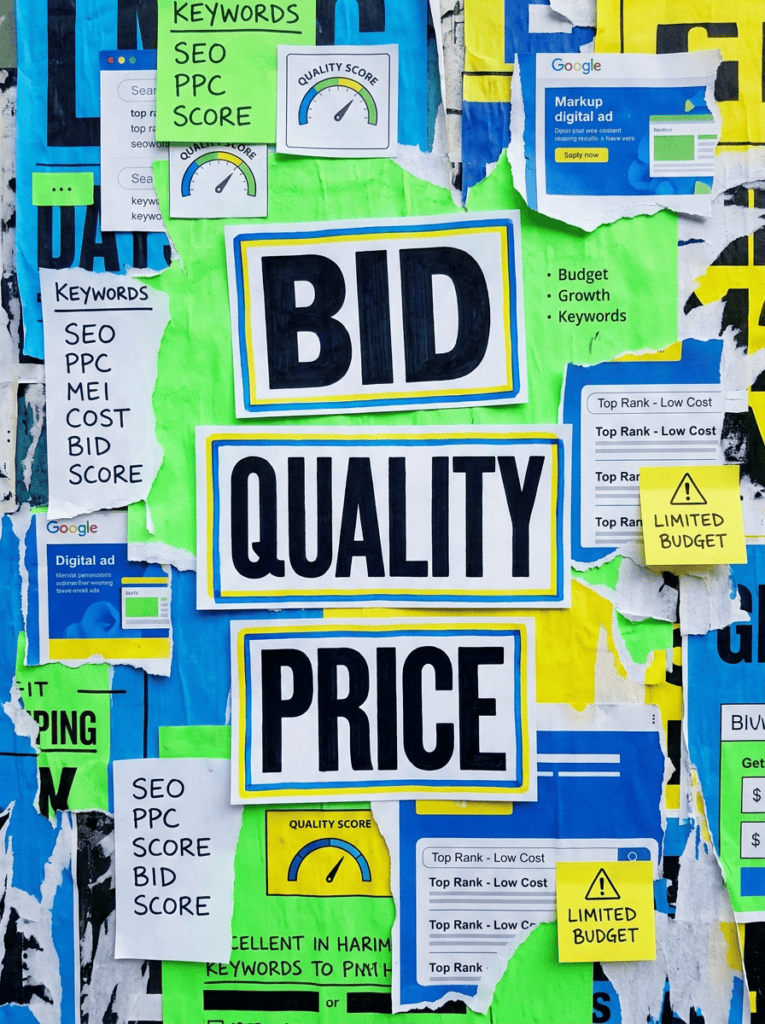
Google scores each keyword from one to ten. The three components behind that score are expected clickthrough rate, how closely your ad matches the intent behind the search, and how relevant and useful your landing page is to the people who click. Each gets rated above average, average, or below average, judged against other advertisers who showed for the exact same search over the last 90 days.
You are graded on a curve against your competitors, not against an absolute standard.
Google’s ad quality guidance makes a point that should worry anyone ignoring this. If your ads are low quality, your actual CPC can end up close to your maximum CPC even when there is barely any competition for the search terms that triggered your ad.
Read the component ratings rather than the headline number:
- Below average ad relevance usually means the ad group is too broad and the copy is trying to speak to everyone.
- Below average landing page experience often means clicks land on the homepage, or a slow page, or a page that never mentions what they searched for.
- Below average expected CTR tends to mean your ad reads like everybody else’s.
- A dash instead of a score means there is not enough exact-match data to judge, so leave it alone.
Landing page experience is the one nobody wants to fix, because it means talking to whoever owns the website. It is also the one that moves the most money. Our landing page checklist covers what needs to be on the page.
You can be the only advertiser in the room and still pay top price, purely because Google does not rate what you are showing people.
4. Your bid strategy might be quietly overpaying
Maximise Clicks does exactly what the name promises. Google spends your budget getting clicks and does not much care what each one costs. Target CPA with a number you invented will have Google bidding whatever it takes to reach it, including far too much on expensive keywords that convert occasionally.
Worth checking:
- Which strategy each campaign actually runs, rather than which one you remember choosing.
- Whether the target was set from real data or from optimism.
- How long ago anyone last revisited it.
- Whether conversion tracking feeds it anything trustworthy.
And the classic mistake worth naming plainly. Lowering your maximum bid to bring down your CPC usually drops you out of the auctions you were winning. Your average CPC falls. Your leads fall further.
Smart bidding is not the problem. Forgetting that you switched it on is.
5. What you don’t control, and what to do about it
You do not control what competitors bid. If a national brand with a marketing department enters your local market, costs rise, and no amount of Quality Score work fully offsets that. You do not control seasonality either, or the fact that January insurance searches cost more than August ones.
What you do control is which searches you show up for at all:
- Tighter Google Ads match types keep you out of loosely related auctions.
- A maintained negative keywords list blocks the waste you already know about.
- Separate ad groups by intent so expensive research terms stop dragging on buying terms.
- Regular search term reviews catch new rubbish before it compounds.
When your quality is fine and costs still rise, the answer is to be pickier, not braver. This is the sort of ongoing work our PPC management exists to do.
Common Mistakes
If you are still asking why is my Google Ads CPC so high after a month of tinkering, one of these is usually the reason.
- Cutting bids as a first response, because it feels like control.
- Chasing a Quality Score of ten on a competitive head term.
- Judging cost per click without knowing what a customer is worth.
- Sending every ad to the homepage, then blaming the landing page rating.
- Treating one low-impression keyword’s terrible score as an emergency.
- Assuming an expensive click is a wasted click.
- Leaving smart bidding untouched for a year and calling it automation.
- Blaming competitors before checking the search terms report.
DIY lane vs done for you lane
DIY lane:
Add the Quality Score column and the three component columns. Sort, filter, and read them properly. Work out your true cost per customer before you change anything.
Tighten your ad groups so each covers a genuinely narrow theme, and rewrite the ads so they answer the search instead of describing your company. Fix the landing pages that are obviously wrong.
That is real work, but a competent owner can do it over a few evenings, and it will move the number.
Done for you lane:
When you have more than a couple of campaigns, when smart bidding is involved, or when the landing page problem needs someone who can actually change the website, this gets hard to do in the gaps between running a business.
Our PPC management work covers the account and the pages it sends people to, because fixing one without the other rarely works.
Related Guides on the wall
If you are working out why is my Google Ads CPC so high, these guides will help you fix the surrounding setup too.
- Google Ads match types Useful if your ads keep showing for searches that were never going to buy.
- Negative keywords Useful if you want to block obvious waste before it reaches the auction.
- Why Is Google Ads Spending My Budget So Fast Useful if the spend disappears before the day does.
- Google Ads Aren’t Profitable Useful if the clicks are affordable but the maths still does not work.
Why is my Google Ads CPC so high FAQs

It usually comes down to quality rather than competition. A low Quality Score, loose match types, weak landing pages and untended bid strategies all push your actual CPC up, sometimes even when few competitors are bidding.
It lowers your maximum, not necessarily your average. More often it drops you out of auctions you were winning, so you get fewer clicks at a similar price and fewer leads to show for it.
Seven is genuinely good. Ten is achievable on branded or very specific terms, and rarely worth chasing on competitive head terms where the effort is better spent elsewhere.
Because Ad Rank folds in ad quality and landing page experience, not just the bid. A competitor with better quality can outrank you while bidding less, and pay less per click for the privilege.
Not as a keyword-level number, because Performance Max does not use keywords in that way. The equivalent signal is the asset group rating, and a poor one raises your effective costs just the same.

Quick tip
Rather have us handle this instead of DIY-ing it? That is literally the job.


Straight talking marketing that gets results.
No pressure, no jargon. Just a clear look at what’s stopping your site from bringing in more enquiries.
Book a free site reviewLike this guide?
Tell Google you want more like it. One click, no sign-up, and FlyPost guides start showing up more often in your search results.
Add FlyPost as a preferred sourceTakes you to Google, then straight back here.