


Why Is My Social Media Reach So Low? Fix What’s Holding Your Content Back


If you’re asking why is my social media reach so low, you’re probably posting regularly and still watching your content barely get seen.
That is frustrating, but it is also common. Reach drops when content fails to earn attention, when the audience fit is wrong, or when the platform has no strong signal that people actually want to see more of it.
This is not always an algorithm conspiracy. Sometimes the content just does not give people enough reason to stop, watch, share or come back.
The quick version
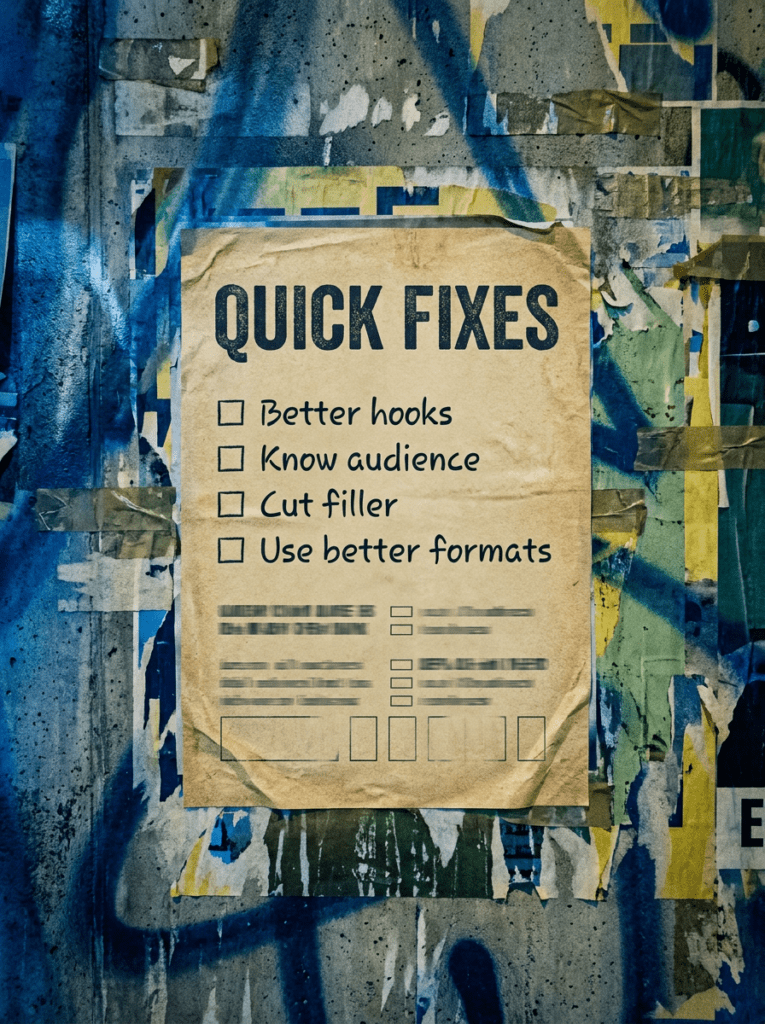
If you only have 20 minutes, start here. These are the fastest checks if you’re asking why is my social media reach so low.
- Improve the first line or opening frame
- Make the content more specific to your audience
- Stop posting generic filler
- Use formats that suit the message
- Give people a reason to save, share, reply or click
If that already feels like a lot, do not worry. Below is the full process in the right order.
Not sure where to start?
The biggest mistake people make when they ask why is my social media reach so low is assuming they need to post more often.
Usually, they need better reasons for people to care.
If the topic is too broad, the hook is weak, the format is wrong, or the content feels like every other post in the feed, posting more of it just gives you more low-reach content.
The better place to start is working out whether your content earns attention before blaming the platform.
Our full guide: Why Is My Social Media Reach So Low
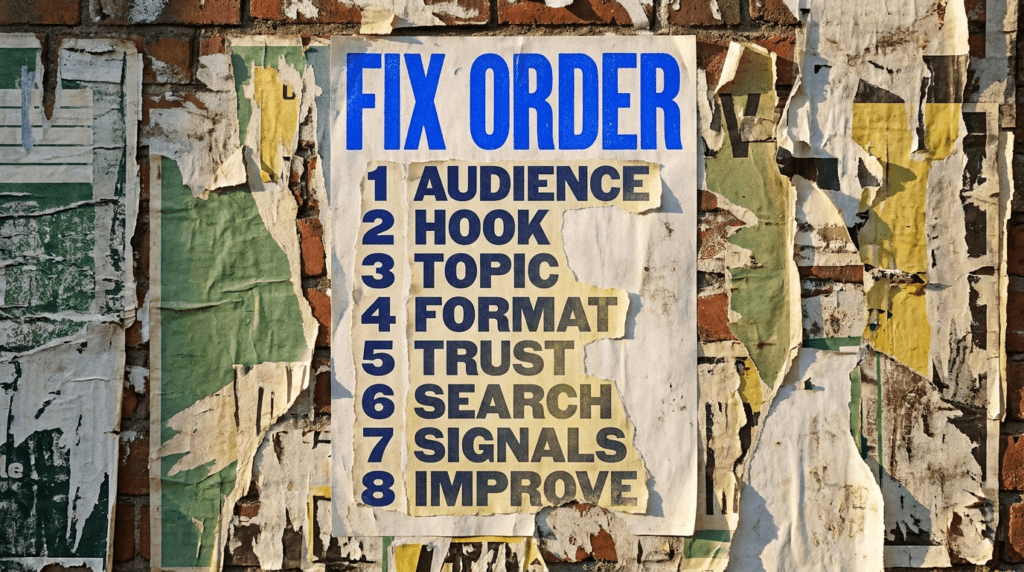
Work through this in order. Skipping steps usually leads to more content, not better content.
Step 1: Accept that attention is harder to win now
- Feeds are busier
- AI content has made sameness worse
- Users move quickly
- Weak openings get ignored fast
- Safe content rarely travels far
Hootsuite’s 2026 Social Media Trends report says attention is the most valuable and scarcest commodity, and that generic content strategies will not cut it because different audiences respond to different cultural signals.
Step 2: Tighten who the content is for
- Pick one clear audience
- Focus on their problems and interests
- Stop trying to appeal to everyone
- Use examples they recognise
- Keep the message sharp
Broad content usually gets broad indifference. The more specific the audience, the easier it becomes to create something worth stopping for.
Step 3: Fix your hooks
- Lead with the problem
- Make the first line specific
- Avoid slow introductions
- Use clear wording over clever wording
- Cut anything that delays the point
Low reach often starts in the first second. If the opening line or frame does not give people a reason to stay, the rest of the post never gets a chance.
Step 4: Stop posting generic filler
- Avoid recycled tips
- Add a real point of view
- Use examples from actual customers or work
- Turn common questions into posts
- Make the content useful, not just active
If your content ideas could fit any business in any industry, they are probably too generic.
Step 5: Match the format to the message
- Use short video when tone or demonstration matters
- Use carousels when the idea needs structure
- Use static posts when the point is quick and visual
- Use text-led posts when the wording is the asset
- Stop forcing every idea into the same format
A strong idea can underperform in the wrong format. The format should make the message easier to understand, not harder.
Step 6: Make content easier to discover
- Use clear captions
- Mention the topic early
- Use searchable wording
- Keep profile text clear
- Avoid hiding the real point behind vague language
Hootsuite’s 2026 report highlights a search-first trend, saying social content now needs to adapt to multi-modal discovery. In plain English: people use social to find answers, not just scroll past pretty posts.
Step 7: Build stronger interaction signals
- Aim for saves
- Encourage shares where it feels natural
- Create posts people want to reply to
- Use DMs and comments as content clues
- Stop judging reach by likes alone
Reach usually improves when platforms see stronger signals that people care. A like is fine. A save, share, reply or DM usually tells you more.
Step 8: Review what actually travels
- Look at your highest-reach posts
- Check hook style, topic and format
- Find patterns in saves, shares and replies
- Cut themes that keep doing nothing
- Build more around what already works
Consistency matters, but blind consistency is just stubbornness in a content calendar.
Common mistakes
These are the things that usually sit behind why is my social media reach so low, especially when a business is posting often but still getting nowhere.
- Posting more instead of posting better
- Trying to reach everyone
- Starting posts with weak hooks
- Copying trends with no relevance
- Using the wrong format for the message
- Ignoring social search behaviour
- Never reviewing what actually travels
DIY lane vs done for you lane
DIY lane:
If you want to fix why is my social media reach so low yourself, start with audience clarity, stronger hooks, better content ideas and a proper review of what already gets attention.
Done for you lane:
If you want the quicker route, we can help you build a sharper Social Media Marketing strategy that earns more reach because the content is clearer, more useful and better matched to your audience
Related Guides on the wall
If you’re trying to fix why is my social media reach so low, these will help you tighten the content strategy around it.
- Read Organic Social Media Guide if you need a stronger overall content approach
- Use Social Media Content Ideas if your posts feel too generic
- Read Content Calendar Guide if consistency is turning into filler
Why Is My Social Media Reach So Low FAQs

Usually because the content is too broad, the opening is weak, the format does not suit the message, or the audience has no strong reason to engage with it.
Not by default. Posting more weak content usually makes the problem bigger. Start by improving the content before increasing volume.
No. Hashtags can help categorise content, but they will not rescue weak posts. Clear topics, strong hooks and useful content matter more.
Start with your audience and your opening line or first frame. If people do not care immediately, the rest of the post will struggle.

Quick tip
Rather have us handle this instead of DIY-ing it? That is literally the job.

Straight talking marketing that gets results.
No pressure, no jargon. Just a clear look at what’s stopping your site from bringing in more enquiries.
Get my free website reviewLike this guide?
Tell Google you want more like it. One click, no sign-up, and FlyPost guides start showing up more often in your search results.
Add FlyPost as a preferred sourceTakes you to Google, then straight back here.