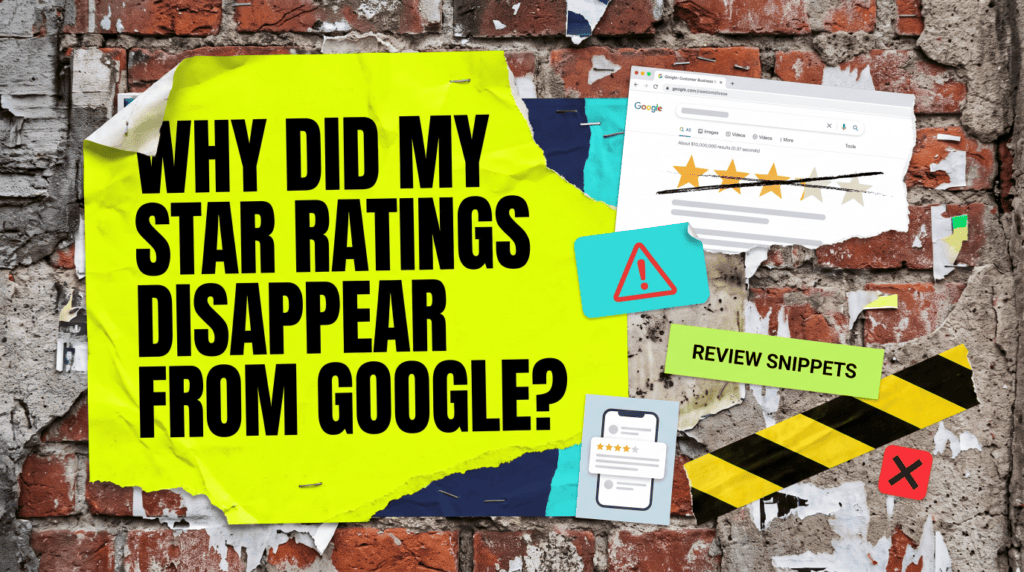
Why Did My Star Ratings Disappear From Google?
Google tightened its review rules on Friday. Here is what actually wipes your stars, and how to get them back.
If you are asking why did my star ratings disappear from Google this week, the timing is probably not a coincidence. On Friday 24 July, Google added a new line to its review snippet guidelines: don’t include fake or undisclosed incentivised reviews on your page or in your structured data markup. It sounds obvious. Plenty of honest UK businesses are about to trip over it anyway.
The Quick Version
Google did not launch an algorithm update. It added one sentence to a documentation page, and that sentence decides whether your stars are allowed to show in search results at all.
Google gave two examples of what counts as a fake or undisclosed incentivised review:
- Reviews that are not based on a genuine experience of your product or service
- Reviews written in exchange for a benefit (money, a discount, a voucher, a free product) that do not clearly and prominently disclose that incentive
That second one is the killer. “Leave us a review and get 10% off” is a completely normal thing for a small business to do, and it is fine, as long as the reviews it generates say so, visibly, on the page.
If they do not, you are no longer eligible for review snippets. The stars stop showing, and in the worse cases a manual action turns up in Search Console.
Not Sure Where To Start?
Reviews, schema and Search Console warnings are the sort of thing that eats a Tuesday and leaves you no wiser. Guess wrong and you either strip out reviews you did not need to lose, or leave the actual problem sitting there.
We will find out exactly why the stars went, fix it properly, and keep an eye on the recrawl so you know when they are back.
The Full Guide: Getting Your Stars Back
When someone asks why did my star ratings disappear from Google, the answer is almost never a mysterious algorithm. It is usually one of five things, and four of them you can sort out this afternoon.
Work out whether it is the new rule or something older
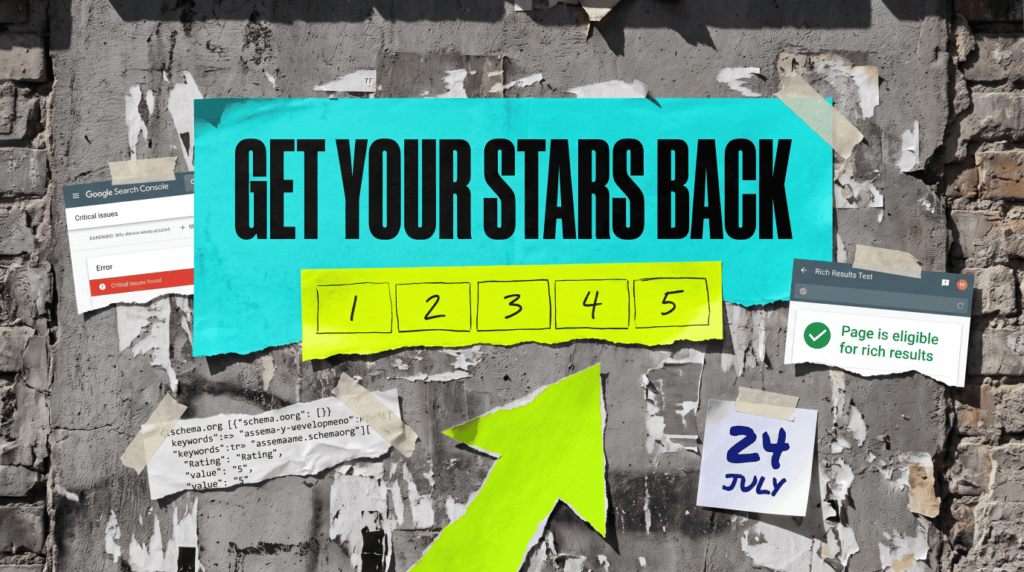
Before you rip anything out, check when the stars actually went. Search Console under Enhancements will show review snippet errors, and the Rich Results Test will tell you whether Google can still read your markup at all.
If the stars went before late July, this guideline change is not your problem. Broken schema, a plugin update, or Google simply choosing not to show the snippet are all far more common causes.
Also worth knowing: Google has never guaranteed that valid markup produces stars. Eligibility is not the same as entitlement, and snippets come and go on their own.
Find the incentivised reviews you have forgotten about
This is where most small businesses get caught. Dig out anything you have run that traded a benefit for a review: a prize draw, a discount code, a free sample sent to a blogger, a “review us and we’ll knock a fiver off” card in the parcel.
Then check the review it produced. Does the review itself, on the page, make the incentive obvious to someone reading it? Buried in your terms and conditions does not count. Google’s wording is “clearly and prominently”.
If you cannot honestly say a customer would spot the incentive from the page, treat that review as undisclosed.
Disclose it properly, or take it down
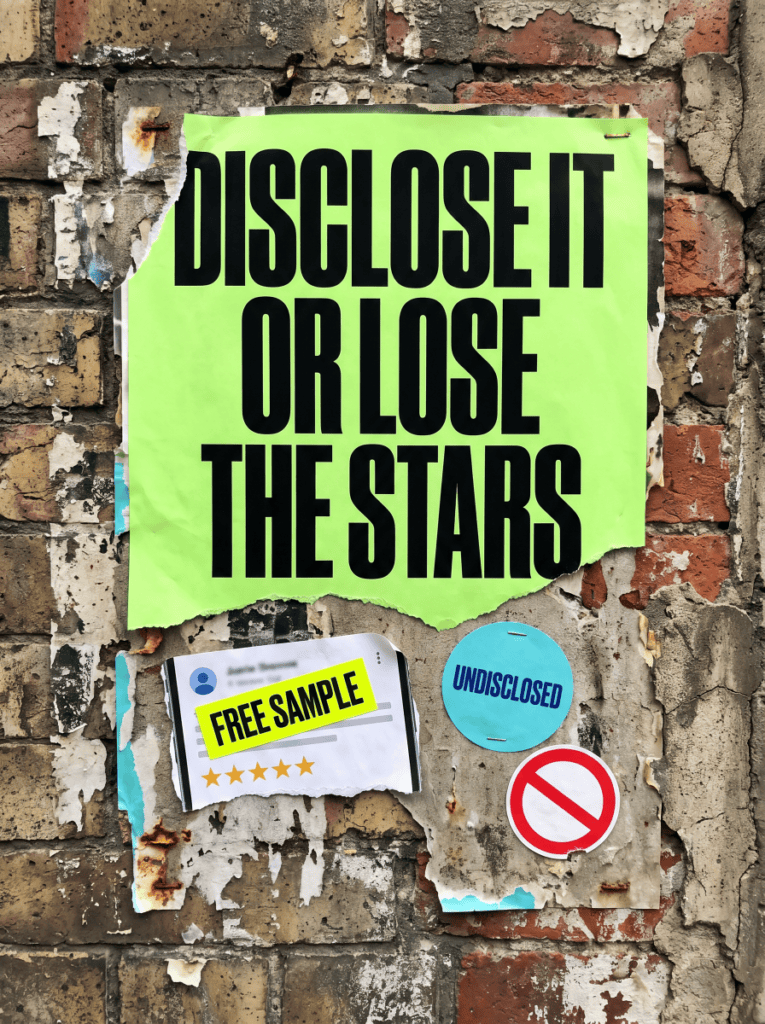
You have two clean options. Add a visible label to the incentivised reviews, something like “This reviewer received a free sample” sitting next to the review, not in a footer, or remove those reviews from the marked-up set entirely.
Google is not banning incentivised reviews outright. It is banning hidden ones. That distinction matters, because it means you do not have to abandon a review-generation scheme that works. You just have to be honest about it in public.
Worth saying out loud: in the UK this is not only a Google problem. Under the Digital Markets, Competition and Consumers Act 2024, in force since 6 April 2025, fake reviews and undisclosed incentivised reviews are illegal, and the CMA opened five fresh investigations in March 2026. Penalties run to 10% of global turnover or £300,000, whichever is higher.
Make the markup match the page
A very common technical cause of vanished stars has nothing to do with incentives. Your structured data claims a rating that a visitor cannot see anywhere on the page, so Google stops trusting it.
Check that every review in your markup is genuinely visible to a human on that URL, that the aggregate rating is calculated from those same reviews, and that you are not marking up reviews of your business on a product page.
If you run WooCommerce or a reviews plugin, look at what it is actually outputting rather than what the settings screen says it is doing. They disagree more often than you would like.
Fix it, validate it, then ask for a review
Once the page is clean, run it through the Rich Results Test to confirm the markup parses. If you picked up a manual action, submit a reconsideration request in Search Console and explain plainly what you removed and why.
Then be patient. Stars do not come back the moment you hit save. Google has to recrawl, reassess and decide the page is eligible again. Two to six weeks is normal, and there is no button that speeds it up.
Common Mistakes
If you are still asking why did my star ratings disappear from Google a fortnight after tidying up, one of these is usually the reason.
- Deleting every review in a panic. Removing genuine reviews because you are not sure which ones were incentivised throws away the asset you were trying to protect. Work out which ones actually carried a benefit and deal with those.
- Putting the disclosure somewhere nobody reads. A line in your terms, a note in the email that requested the review, a policy page nobody visits. None of that satisfies “clearly and prominently”. Could a customer reading the review on your page tell that the reviewer got something?
- Marking up reviews that live somewhere else. Pulling your Google or Trustpilot rating into your own schema and presenting it as first-party review data is a long-standing violation, and a far more common cause of lost stars than this week’s change.
- Assuming the stars were taken away deliberately. Sometimes Google just stops showing them. If Search Console reports no errors and the Rich Results Test is clean, there may be nothing to fix.
- Adding more markup to compensate. Stacking on extra schema types when the review snippet is the problem does not help. It usually just gives Google more to disagree with.
Two Ways To Deal With This
DIY lane:
Pull your review sources into one list, flag anything that involved a benefit, add visible disclosures or remove those reviews, then validate the page and wait. It is doable in an afternoon if your review setup is simple and you know where every review came from.
Done for you lane:
We audit the review markup, trace where each review actually originated, sort the disclosure wording, handle any Search Console manual action, and watch the recrawl so you know when the stars are back. You get on with running the business.
Related Guides on the wall
If you are working out why did my star ratings disappear from Google, these guides will help you fix the surrounding setup too.
Why Did My Star Ratings Disappear From Google FAQs
Usually a markup problem or a guidelines problem. Google refreshed its review snippet guidelines on 24 July 2026 to prohibit fake or undisclosed incentivised reviews, so if your reviews were earned with a discount or a freebie and that was not disclosed on the page, eligibility can be pulled. Broken schema after a plugin update is the other common cause.
Not automatically. Google’s objection is to incentivisation that is hidden. If the review clearly and prominently tells the reader that the reviewer received money, a discount, a voucher or a free product, it can still be used. Burying that in terms and conditions will not pass.
There is no fixed timescale. Google has to recrawl the page, reassess the markup and decide you are eligible again, which typically takes a few weeks. If a manual action was applied, a reconsideration request can take longer still.
In the UK, yes. The Digital Markets, Competition and Consumers Act 2024 made fake and undisclosed incentivised reviews illegal from 6 April 2025, with fines of up to 10% of global turnover or £300,000. Losing your rich snippet is the cheapest possible outcome.
They are not a ranking factor. They are a click-through factor, and a good one — which is exactly why losing them tends to show up as a traffic drop with no ranking movement at all.
Star ratings are one of the few things in search that are entirely within your control. Google is not asking you to stop encouraging reviews. It is asking you to say so out loud.
Like this guide?
Tell Google you want more like it. One click, no sign-up, and FlyPost guides start showing up more often in your search results.
Add FlyPost as a preferred sourceTakes you to Google, then straight back here.