

How Do I Get More Clients As An Insurance Broker?
The six things business owners search for before they pick a broker, and most broker websites answer none of them
If you are searching how to get more clients as an insurance broker, you have probably already done the obvious. The renewals are looked after, the referrals from the accountant keep coming, the team knows its trades inside out and the website was redone a couple of years ago with a stock photo of a handshake and a ‘get a quote’ button. Yet new business is flat, the enquiries that do arrive are for car insurance you do not want, and the businesses in your town that need a proper broker seem to end up with an online quote or a national firm.
That is rarely one big problem. It is a short list of things a business owner looks for before they pick a broker, usually the month before renewal, and most broker websites answer none of them because they were written for the insurers rather than the client.
Quick Version
Business owners find a broker three ways: a search for their trade plus insurance, a search for a specialist cover with their sector, and a search for ‘insurance broker’ with the town once the online quote has let them down. Most broker websites win none of them, because every trade is on one ‘business insurance’ page, the specialist covers are a list, and the site never says what a broker actually does.
The six things to check, in order:
- Every trade is on one ‘business insurance’ page
- The specialist covers are a list, not pages
- The site never explains what a broker does
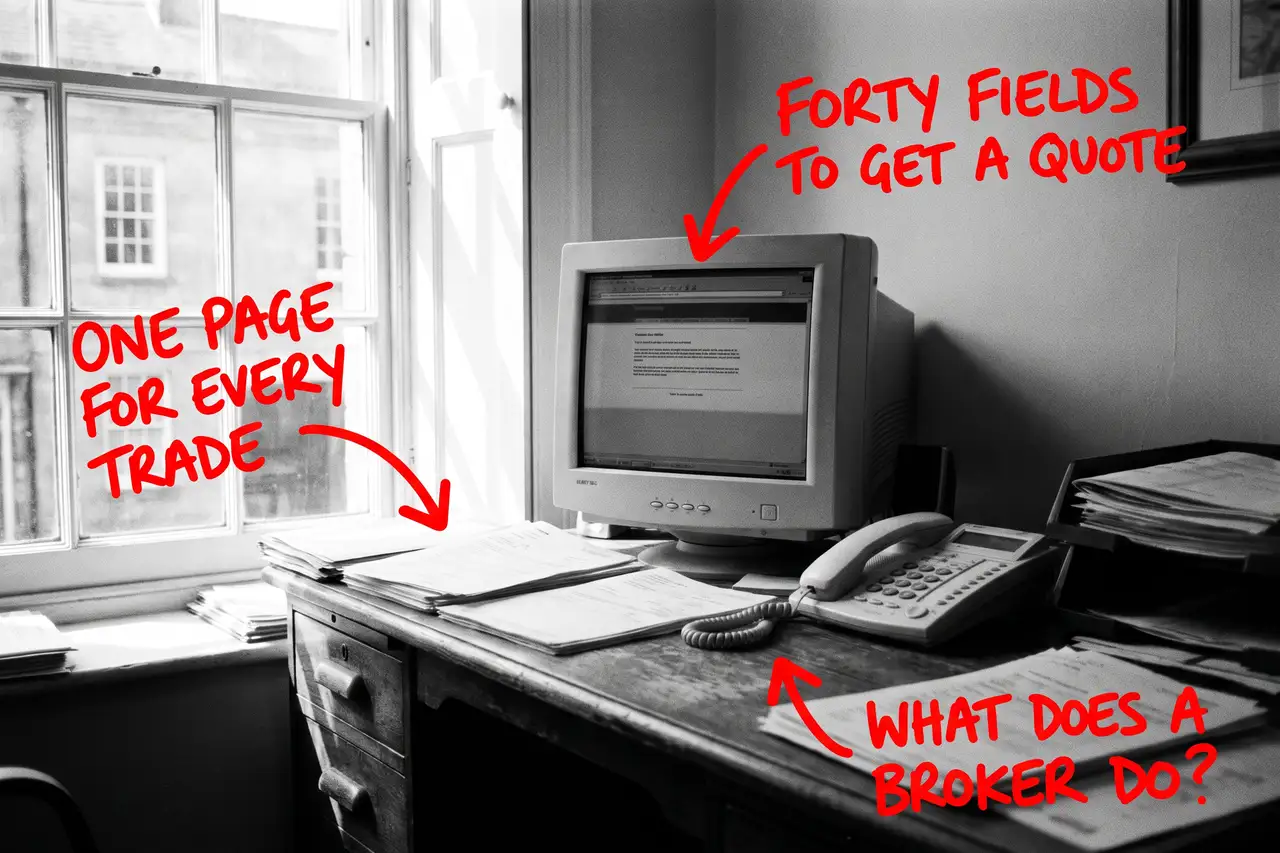
- The quote journey is a forty-field form or a call-back
- The team and the regulator are a footer line
- You are counting visits, not quotes by cover
Most brokerages have four of these at once. None of them needs a new website, and none needs an insurer’s marketing budget.
Not Sure where to start?
All of this is a few quiet weeks if you know how business owners search for cover and how to write a trade page that ranks, and another year of watching the comparison sites if you do not. If you would rather someone wrote the trade and cover pages, explained what you do, shortened the quote journey and told you plainly which searches are now bringing quotes, that is what our SEO & AI service for insurance brokers does.
How Do I Get More Clients As An Insurance Broker? The Full Guide
Work through these in order. The trade pages come first because they are where the quotes worth placing come from, and the broker explainer comes second because it is what turns a comparison site refugee into a client.
Every trade is on one ‘business insurance’ page
A scaffolder types ‘scaffolding insurance’. A recruitment agency types ‘recruitment agency insurance’. A plant hire firm types ‘plant hire insurance’ and the county. Three different clients, three different covers, three different renewal dates, and most broker websites answer all of them with one page headed ‘business insurance’ that lists public liability, employers’ liability and ‘much more’.
Google cannot rank a bullet point against a page that gives the trade a proper explanation, and the scaffolder cannot tell from a list whether you have placed cover for twenty scaffolding firms or none.
Write a page for each trade or sector you want more of. What that trade typically needs, the covers that get missed, what pushes the premium up or down, what you need from them to quote and how renewal works with you. Start with the six or eight trades that make up your book, not the whole of UK industry, and keep every sentence within what the regulator allows.
The specialist covers are a list, not pages
Professional indemnity, directors and officers, fleet, contractors all risks, cyber, landlord and high net worth home are different searches by different people, and on most broker websites they are a row of icons with a sentence each.
An architect searching ‘professional indemnity for architects’ wants to know what the cover does, what their regulator or client contract requires, what a typical limit looks like and how you place it. A list cannot answer that and cannot rank for it.
Give each specialist cover you want more of its own page, written for the person buying it rather than the insurer underwriting it. Link each one to the trade pages it applies to, so the architect finds professional indemnity from the architects page and the other way round.
The site never explains what a broker does
Half the business owners who find you have only ever bought insurance from a comparison site, and the only reason they are searching for a broker is that the online quote said no, or quoted a number that made no sense, or paid a claim badly. They do not know what you do, whether you charge them, whether you are tied to one insurer or how renewal works.
Most broker websites assume all of that. Write a plain page that answers it: what a broker does, how you are paid, which markets you can access, what happens when there is a claim and what the client has to do at renewal. No jargon and no promises about premiums.
That page ranks for ‘what does an insurance broker do’ with your town, it is what AI tools draw on when someone asks the same question, and it is the page that turns a comparison site refugee into a client who stays.
The quote journey is a forty-field form or a call-back
A business owner searching for cover the month before renewal wants to know what you need from them, how long a quote takes and what happens next. On most broker websites the answer is a form that asks for turnover, wage roll, claims history and the registration of every vehicle before they have spoken to anyone, or a ‘request a call-back’ button with no indication of when.
Say plainly what the process is: send us three things, we come back within a working day with what we need, a quote follows once we have it. Then ask for the three things and a phone number, and nothing else. The detail can wait for the conversation.
Keep the long form for the clients who prefer it, but do not make it the front door.
The team and the regulator are a footer line
Business owners choose a broker the way they choose an accountant: on the person. They want to know who will handle their account, which trades that person knows, and that the firm is who it says it is. On most broker websites the team is a group photo and the regulatory status is a line in the footer nobody reads.
Give each account handler a page. Name, what they place, the trades they know, how long they have done it and how to reach them. Put the firm’s FCA registration in words on the about page, with the register number and what it means for the client, rather than a logo.
The same words are what AI tools check when someone asks which brokers near them specialise in their trade. A firm whose handlers and registration are written out gets named ahead of one whose team is a photo.
You are counting visits, not quotes by cover
A broker website can double its visits and write no more business, usually because the visits are people looking for car insurance, students writing an essay on the insurance market, or a competitor checking your prices.
Put a tracked phone number on the site, keep the quote form short, and record which trade or cover each quote request is for and which page it came from. In Search Console, look at which searches you appear for and whether they are the trades and covers you want. If ‘cheap car insurance’ is your biggest search, the wrong page is doing the ranking.
Once you can see quote requests by trade and cover, you know which page to write next and which parts of the book the website is actually feeding. Report that to the partners instead of the visit count.
Common Mistakes
If you are still searching how to get more clients as an insurance broker after a couple of months of changes, one of these is usually why.
- Writing for ‘insurance broker’ instead of the trade and the cover. The generic word belongs to the comparison sites and the nationals. ‘Scaffolding insurance’ plus your county belongs to whoever explains it best.
- Writing for the insurer instead of the client. A page full of policy wording ranks for nothing a business owner types and reassures nobody.
- Hiding how you are paid. Business owners assume a broker costs more. A plain explanation of commission and fees removes the objection before the first call.
- Letting the logos do the talking. Insurer logos and a footer line do not tell a client who you are or what you place. Words do.
- Judging it after a month. The Business Profile can move in weeks. Trade and cover pages take a quarter or two to rank, and renewals run on a twelve-month cycle. Fix the list, then judge it over a renewal year.
DIY lane vs done for you lane
DIY lane:
Write a page for each of your six biggest trades, with what they need, what gets missed and what you need to quote. Give each specialist cover you want more of its own page. Write the plain page on what a broker does and how you are paid. Shorten the quote journey to three things and a phone number. Put the handlers and the firm’s registration in words.
Then put a tracked number on the site and leave it alone for a quarter while you watch quote requests by trade and cover.
Done for you lane:
This is the first two months of our SEO & AI service for insurance brokers. Trade and cover pages written for the trades that make up your book, the broker explainer written, the quote journey shortened, the handlers and the firm’s registration put in words, insurance agency structured data added so Google and the AI tools can read it all, and quote tracking by cover set up. Every page stays within what the regulator allows and you sign off before anything goes live.
You get told which trades and covers are now bringing quotes, which are not yet, and why. Then we keep going.
Related Guides on the wall
If you are working out how to get more clients as an insurance broker from your own website, these three cover the individual fixes in more depth.
- Service Page Checklist: Turn More Visits Into Enquiries for turning each trade and cover page into one that ranks and gets the quote request.
- Why Is My Homepage Ranking Instead Of My Service Page? for when the homepage outranks the trade pages that should be doing the work.
- AI Search Visibility: How Small Businesses Get Cited for what AI tools look for before they name a firm in an answer.
How Do I Get More Clients As An Insurance Broker FAQs

Write a page for each trade and specialist cover you want more of, explain plainly what a broker does and how you are paid, shorten the quote journey and put the team and the firm’s registration in words. Business owners are already searching their trade plus insurance. The broker that explains it best gets the quote, and it is not shared with five other firms.
Not for car or home insurance, and you do not need to. The trade and specialist cover searches, and ‘insurance broker’ with the town, are won by the broker with a proper page for each. The comparison sites do not have those pages and cannot write them.
Yes, plainly. Business owners who have only used comparison sites assume a broker costs more, and a page that explains how you are paid and what the client gets for it removes the objection before the first conversation. Keep it within what the regulator allows.
For every trade you want more of, yes. Six or eight proper trade pages beat forty trades in a list, and each one ranks for the search that trade makes the month before renewal. Start with the trades that make up most of your book.
The Business Profile can move within weeks once it is fixed. Trade and cover pages usually take a quarter or two to rank, and renewals run on a twelve-month cycle, so judge it over a full renewal year on quote requests by cover rather than on visits.
Getting more clients as an insurance broker from your own website is nearly always a matter of writing for the trade and the cover rather than for the word ‘broker’. Start with the trades that make up your book and the page that explains what you do, keep every word within what the regulator allows, and the rest follows from there.
Like this guide?
Tell Google you want more like it. One click, no sign-up, and FlyPost guides start showing up more often in your search results.
Add FlyPost as a preferred sourceTakes you to Google, then straight back here.