


SEO Rankings Up But Traffic Down? What Changed

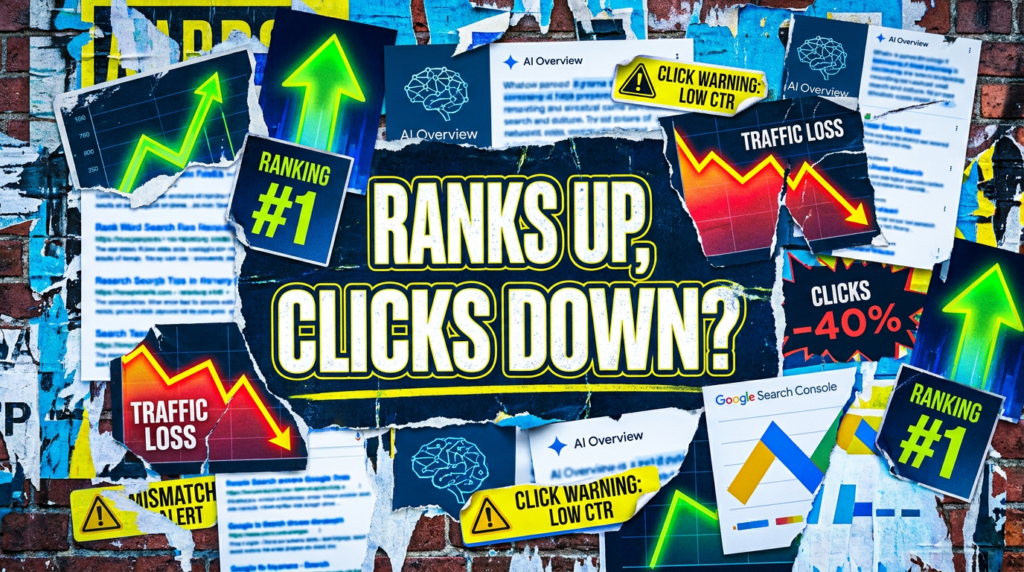
Ranking well is still useful, but it does not guarantee clicks anymore. Here is why the numbers can look good while traffic and enquiries quietly fall.
SEO rankings up but traffic down is exactly the kind of report that makes business owners suspicious. Fair enough.
For years, SEO was sold as a fairly simple chain: rank higher, get more clicks, win more leads. That chain still exists, but it has more cracks now.
Search results are busier. AI Overviews can answer questions before someone clicks. Ads, maps, shopping boxes, Reddit threads, videos and comparison sites can all sit around your result. A keyword can rank higher and still send fewer people to your website.
That does not mean SEO is dead. It means rankings on their own are not enough. You need to look at visibility, clicks, page quality, search intent and enquiries together.
Quick Version
If rankings improved but traffic dropped, do not assume the SEO worked or failed yet. You need to find out what changed around the search result.
A few common causes:
- AI Overviews or other search features may answer the query before users click.
- Higher rankings on low-value keywords can make reports look better than reality.
- Search demand may have dropped, even if your position improved.
- A better title or richer result from a competitor can steal the click.
- Informational rankings can rise while commercial traffic falls.
- Long-tail losses can hide behind a few improved headline keywords.
- Tracking, seasonality or website changes can make the drop look worse than it is.
The useful question is not “did rankings go up?” The useful question is “did the right visibility turn into useful traffic and enquiries?”
Not Sure where to start?
Start in Search Console. Do not begin with a ranking tracker screenshot. Ranking tools can help, but they do not show the full search result, the click behaviour, or whether the traffic mattered.
Look at the pages that lost clicks first. Then compare those pages against impressions, average position, queries and enquiry performance. That usually tells you whether the issue is visibility, click-through rate, search intent, demand, or the page itself.
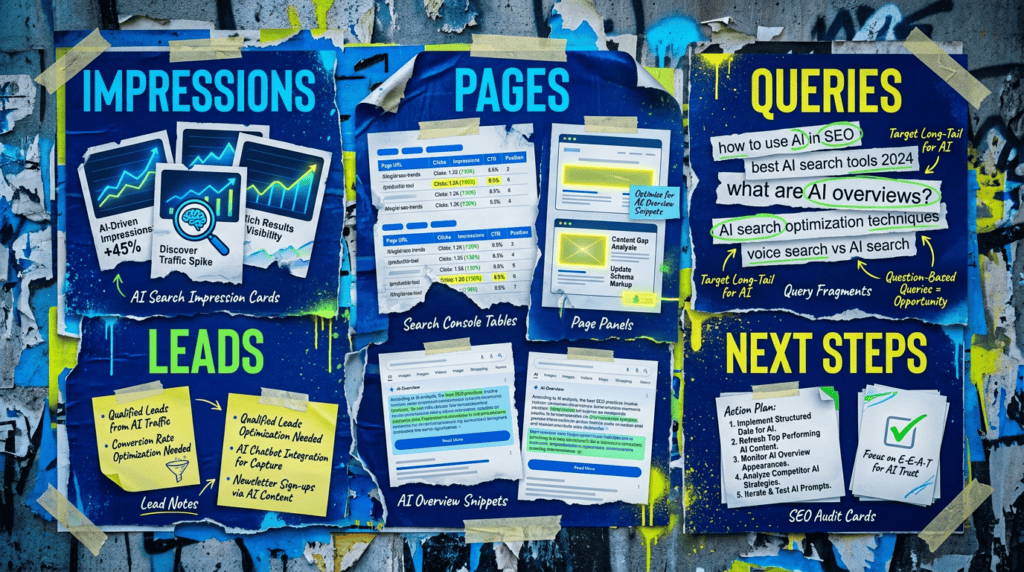
Our full SEO rankings up but traffic down guide
This is not a guide about panicking over one graph. It is about working out whether the site has a real SEO problem, a reporting problem, or a search results problem.
If it turns out to be a real SEO problem rather than a reporting one, the fix is months of ordinary work rather than one clever change. What does an SEO agency do sets out what that month looks like, and why is SEO so expensive explains what you are paying for.
Rankings can improve while clicks fall
Rankings only show where you appear. They do not show how busy the result page has become, whether users still need to click, or whether your snippet gives people a reason to choose you.
Google’s AI search guidance makes the important point that generative AI features still sit inside the wider Search experience. In plain English, AI search is not a separate world. It is another layer inside the same search journey.
That matters because you can hold a decent organic position and still lose clicks to:
- AI Overviews answering simple questions directly
- Ads sitting above the organic results
- Map packs taking local intent
- Shopping results pulling product clicks away
- Reddit, forums or comparison sites taking trust-based searches
- Featured snippets solving the query without a visit
- Competitors using stronger titles, offers or proof
A ranking report might say “position improved.” The search result might say “nobody needs to click you.” That is the gap.
Not all rankings are worth the same
A ranking increase only helps if the keyword matters. Some rankings look lovely in a report and do very little for the business.
A page can rank better for an informational query, a vague question, a low-intent phrase or a term outside your service area. That gives the SEO report a nice little glow, but it does not always bring buyers.
Better signs include:
- Commercial queries moving in the right direction
- Service pages gaining impressions from relevant searches
- Local terms improving in the right area
- Blog traffic leading readers towards useful next steps
- Enquiries increasing from pages that matter
- More clicks from people looking for something you actually sell
Weaker signs include:
- Rankings rising for “what is” style terms with no next step
- Blog impressions growing while service pages stay flat
- Traffic increases from countries or areas you do not serve
- Keywords that sound relevant but never create enquiries
- Page-one movement on searches with hardly any demand
Rankings are not trophies. They are supposed to help people find the right page. If they do not do that, the number has limited value.
Click-through rate can be the real problem
If impressions hold steady, rankings improve, and clicks fall, click-through rate deserves attention. This does not mean you rewrite every title on the site like a panicked raccoon. It means you look at the search result and ask why someone would skip you. Possible issues include:
- Title tags that sound flat, vague or outdated
- Meta descriptions that fail to explain the value
- Competitors offering clearer prices, proof or next steps
- A query that now triggers an AI Overview or featured answer
- Local packs pushing organic listings further down
- Results that answer the question before users reach your site
- Brand trust working against you when competitors look more familiar
Sometimes the fix is simple. A better title. A clearer page angle. A stronger answer near the top of the page. Other times, the search result has changed so much that the keyword no longer deserves the same priority. That is not failure. That is search moving the furniture around again.
AI search changes what visibility means
AI Overviews and AI Mode make this more awkward. A user can see your site, your brand, your answer, or your competitors without following the old click path. That can reduce traditional traffic while still creating some visibility.
That is useful, but only if the visibility helps the business.
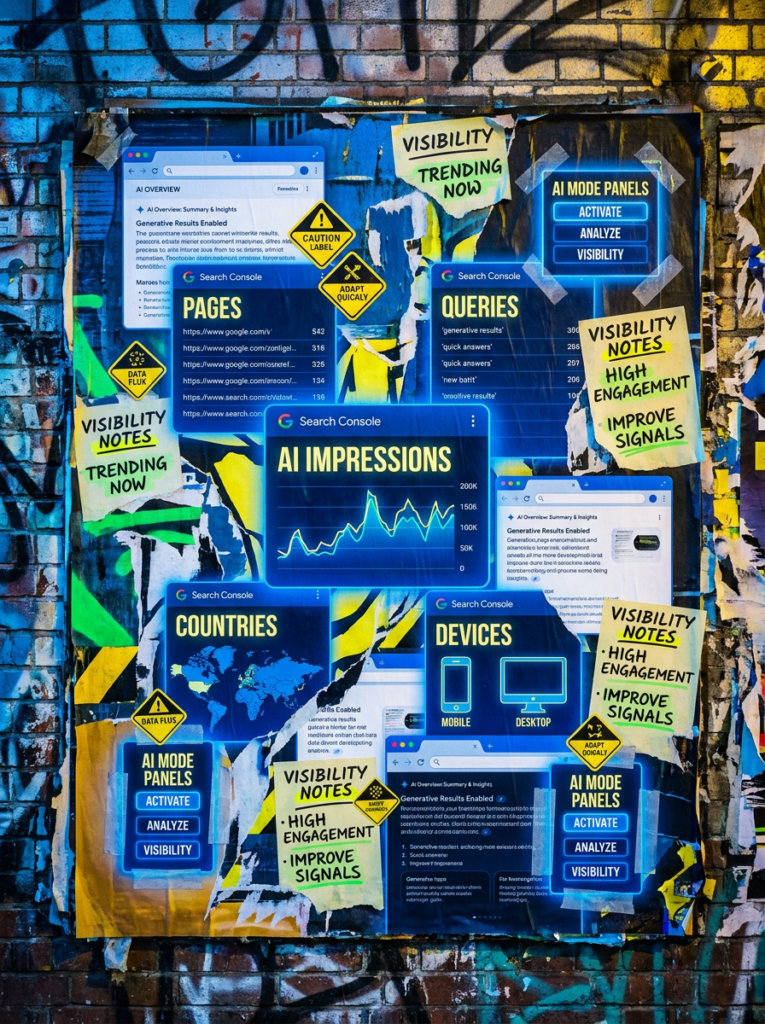
Search Generative AI performance reports in Search Console now give site owners a dedicated view of impressions from generative AI features on Search. That gives you another layer to review, but it still needs context. AI visibility should not replace normal SEO reporting. It should sit beside:
- Organic clicks
- Service page performance
- Enquiry data
- Brand searches
- Assisted journeys
- Lead quality
- Commercial query movement
The trap is treating AI impressions like a new vanity metric. Being seen is not the same as being chosen. If AI search visibility grows but enquiries do nothing, you still need to ask whether the site, offer and content are pulling their weight.
Enquiries matter more than tidy ranking graphs
This is where small businesses need to be ruthless. A rankings-up, traffic-down report might still be fine if enquiries improved. It might also be a warning sign if the traffic that disappeared was the traffic that used to convert. Do not judge the site by one metric. Compare:
- Which pages lost clicks
- Whether those pages generated leads before
- Search terms that moved up or down
- Enquiries from organic search
- Call, form and booking data where available
- Changes to titles, pages, tracking or site structure
- Competitor visibility across the same searches
The report should answer a commercial question: Is the website getting in front of the right people and turning enough of them into useful enquiries? If the answer is no, the fix might involve SEO, content, tracking, page copy, local visibility, AI search clarity or all of the above.
This is why SEO & AI needs to focus on business outcomes, not just rankings that look nice in a dashboard.
Common Mistakes
These are the mistakes that make this harder than it needs to be.
- Celebrating ranking gains without checking traffic or enquiries.
- Assuming AI Overviews caused every click drop.
- Rewriting pages before identifying which queries changed.
- Treating all keywords as equal.
- Ignoring title tags and search snippets.
- Forgetting that local packs, ads and forums can steal attention.
- Looking only at blog traffic while service pages stay weak.
- Reporting visibility without connecting it to leads.
DIY lane vs done for you lane
DIY lane:
Start with the pages that lost clicks. Compare impressions, position and queries inside Search Console. Then search the main terms manually and look at what surrounds your result. If the page still ranks but gets fewer clicks, the issue may sit in the search result, title tag, intent match or AI answer layout.
Done for you lane:
If you want the faster route, we can review the pages, queries, AI search visibility, click-through issues and lead data together. The goal is simple: work out whether your SEO is actually helping the business, not just moving numbers around.
Related Guides on the wall
If SEO rankings up but traffic down is the problem, these guides will help you understand the wider picture.
- AI search visibility Useful if you want to understand how small businesses can appear in AI search without chasing gimmicks.
- Do I Still Need SEO Useful if AI search has made you question whether traditional SEO still matters.
- SEO audit checklist Useful if the traffic drop needs a calmer page-by-page investigation.
SEO rankings up but traffic down FAQs

SEO rankings up but traffic down usually means something changed around click behaviour. AI Overviews, ads, maps, search intent, weaker snippets, demand changes or lost long-tail traffic can all reduce clicks even when rankings look better.
AI Overviews can reduce clicks for some queries because users may get enough information directly in the search result. The impact depends on the query, the industry, the page, and whether users still need to visit a site before taking action.
Yes, but rankings should not sit alone. Rankings matter when they create useful visibility, clicks, enquiries and sales. A ranking that never brings the right person to the right page has limited business value.
Start with pages that lost clicks. Compare clicks, impressions, average position and queries. If position improved but clicks dropped, look at the search result itself and check whether AI features, ads, maps or competitor snippets changed.
Yes. FlyPost helps small businesses review SEO & AI visibility, organic traffic, search features, content, technical issues and lead performance together, so the strategy stays tied to business results.

Quick tip
Rather have us handle this instead of DIY-ing it? That is literally the job.

Straight talking marketing that gets results.
No pressure, no jargon. Just a clear look at what’s stopping your site from bringing in more enquiries.
Get my free website reviewLike this guide?
Tell Google you want more like it. One click, no sign-up, and FlyPost guides start showing up more often in your search results.
Add FlyPost as a preferred sourceTakes you to Google, then straight back here.