



Why Is SEO So Expensive? | What You’re Actually Paying For

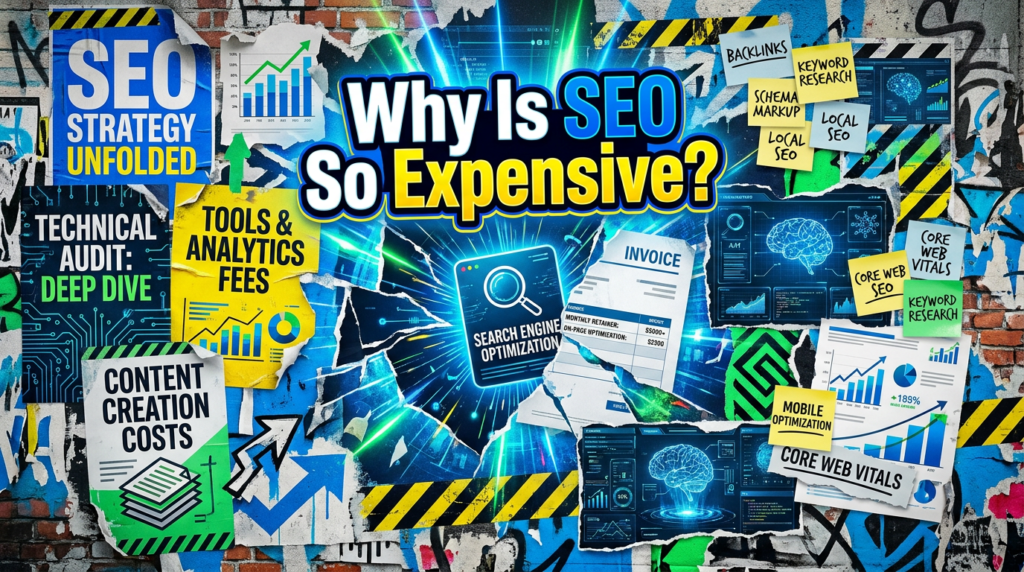
If you’re asking why is seo so expensive, you’re probably looking at SEO quotes and wondering why one person is offering it for £150 while another wants a proper monthly budget.
Fair question.
SEO can look expensive because the work is not always obvious from the outside. A lot of it happens behind the scenes: research, audits, page planning, technical checks, content updates, reporting, competitor review, internal linking, local signals, and constant judgement calls.
But let’s be blunt. Some SEO is expensive because it is valuable. Some SEO is expensive because the provider is hiding behind vague retainers and impressive-looking activity that does not connect to results.
The trick is knowing the difference.
If you want a clearer starting point, our UK SEO packages page explains how we structure SEO support.
The quick version
If you only have 20 minutes, start here. These are the key things to understand if you’re asking why is seo so expensive.
- Good SEO is not one task. It is research, technical work, content, testing, reporting and ongoing judgement
- Cheap SEO often skips the thinking and sells activity instead
- The price should match the competition, website condition, service value and amount of work needed
- SEO is only worth paying for when it connects to commercial goals
- A clear SEO package should explain what is being done, why it matters, and how progress will be judged
If that already feels like a lot, do not worry. Below is the full breakdown in the right order.

Not sure where to start?
The biggest mistake people make when they ask why is seo so expensive is comparing SEO prices without comparing what is actually included.
One quote might include strategy, technical checks, content planning, page optimisation, reporting and ongoing improvement.
Another might include a monthly report, a few generic blog posts and a vague promise to “boost rankings.”
Those are not the same thing.
The better place to start is asking what the SEO work is meant to improve. Rankings? Traffic? Enquiries? Local visibility? Product sales? AI search visibility? If nobody can explain that clearly, the price is already suspect.
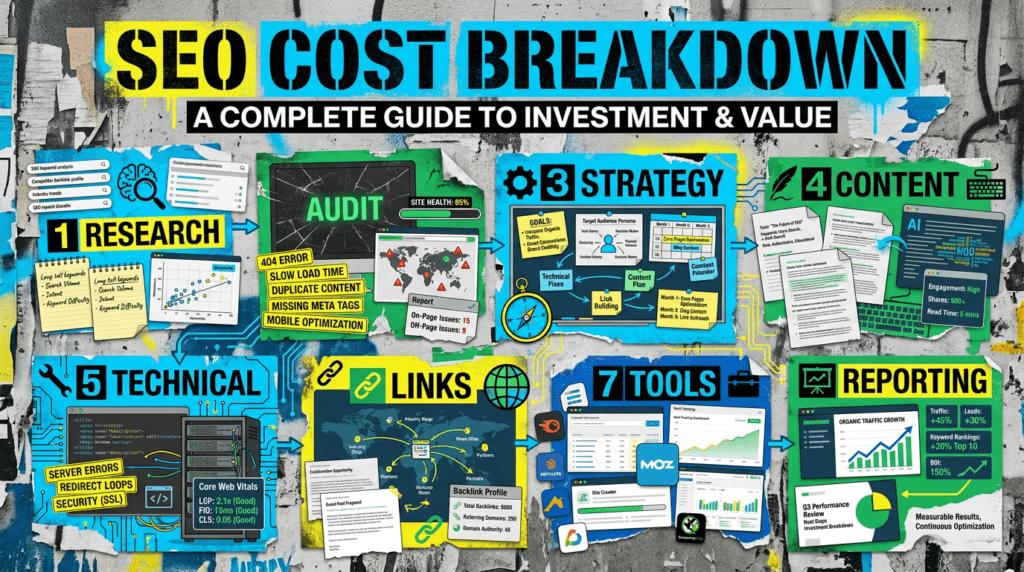
Our full guide: Why Is SEO So Expensive
Work through this in order. It will help you understand what affects SEO cost, what good support should include, and when you should walk away.
Step 1: SEO starts with research, not random tasks
Good SEO starts by working out what people search, what they mean, how competitive the market is, and which pages need to exist.
That takes time.
- Keyword research
- Competitor review
- Search intent checks
- Page mapping
- Local search review
- Commercial priority setting
This is where cheap SEO usually cuts corners. It jumps straight into “optimising” pages before anyone has worked out whether those pages are targeting the right searches.
If the keyword strategy is wrong, the rest of the work can look busy while quietly going nowhere.
Step 2: Technical problems can quietly hold everything back
SEO also gets more expensive when the site has technical issues.
A clean website is easier to work on. A messy site takes longer because someone has to find, explain and fix the problems before growth work can properly land
Common issues include:
- Indexing problems
- Redirect issues
- Slow templates
- Broken internal links
- Duplicate pages
- Canonical problems
- Weak site structure
- Poor mobile experience
This is why two businesses can get very different SEO quotes. One site might need a light tidy-up. Another might need proper technical repair before content work has a chance.
Step 3: Good SEO needs strategy, not just activity
A lot of cheap SEO is built around activity.
You get a report. You get a few updates. Maybe a blog goes live. Something probably gets “optimised.”
That does not mean the work is strategic.
Good SEO should answer:
- Which pages matter most?
- What is the fastest route to better enquiries?
- What needs fixing first?
- Which keywords are actually worth targeting?
- Which pages should link to each other?
- What should be left alone?
- What does success look like in 3, 6 and 12 months?
That thinking is part of the cost. It is also the part that stops SEO becoming a pile of disconnected tasks.
Step 4: Content has to be genuinely useful now
Content is another reason SEO costs money.
Not because every business needs endless blogs. Most do not.
But the pages that do exist need to be useful. They need to answer real questions, match search intent, explain the offer clearly, and give people enough confidence to take the next step.
Google’s guidance around helpful, reliable, people-first content focuses on content that gives people original, useful information rather than content created mainly to chase rankings.
For small businesses, this usually means improving:
- Service pages
- Location pages
- Product pages
- Helpful guides
- FAQs
- Comparison content
- Proof and trust sections
Good SEO content takes thought. Thin SEO content is easy to produce, but that is exactly why it usually does not do much.
Step 5: SEO is tied to commercial pages
If you are paying for SEO, the work should not live in a blog bubble.
Guides can bring traffic. Informational posts can build visibility. But commercial pages usually do the heavier work when someone is deciding whether to enquire.
That includes pages such as:
- Core service pages
- Local service pages
- Pricing pages
- Contact pages
- Product or collection pages
- Case study pages
- Comparison pages
This is why our SEO & AI work focuses on visibility and decision-making, not just rankings for the sake of rankings.
Step 6: Ongoing SEO costs money because the market keeps moving
SEO is not a one-and-done job.
Competitors publish new pages. Google changes how results look. AI search features shift user behaviour. Pages decay. Internal links need updating. Search intent changes. New services launch. Old pages stop pulling their weight.
Ongoing SEO usually includes:
- Performance review
- Search Console checks
- Content updates
- New page planning
- Internal linking improvements
- Technical monitoring
- Competitor review
- Reporting and next-step planning
This is why a proper monthly SEO package costs more than a one-off task list. You are paying for ongoing direction, not just one batch of edits.
Good SEO does not rely on guesswork.
There are free tools, and some of them are excellent. Google Search Console and GA4 matter a lot. But professional SEO work often also uses paid tools for keyword research, competitor review, crawling, backlink analysis, rank tracking, reporting and AI visibility checks.
Tools do not replace judgement, but they do help speed up the work and make better decisions.
That cost has to live somewhere. Either it is built into the service, or the person doing the work is flying half-blind.
Step 8: Cheap SEO can become expensive later
The cheapest SEO quote is not always the cheapest option.
Bad SEO can leave you with:
- Thin pages nobody needs
- Keyword-stuffed copy
- Weak AI-generated content
- Messy internal links
- Pointless directory links
- Reports full of noise
- Pages targeting the wrong searches
- No clear link between work and enquiries
Then you have to pay someone else to unpick it.
That does not mean every affordable SEO option is bad. It means you should understand what you are getting. A focused entry-level package can be useful when the scope is clear. A cheap vague package is usually where the trouble starts.
Step 9: The right SEO cost depends on the business
There is no single fair SEO price for every business.
A local business in a low-competition area does not need the same level of work as an ecommerce brand, a national lead-gen site or a business trying to recover from technical problems.
The price depends on:
- How competitive the market is
- How much work the site needs
- How many services or locations matter
- Whether content needs writing
- Whether technical fixes are needed
- Whether local SEO is involved
- Whether PPC, social or AI visibility also need tying in
- How quickly the business wants to move
That is why fixed packages can be helpful for simple support, while custom SEO work makes more sense when the scope needs to be built around the business.
Step 10: Good SEO should be clear enough to explain
This is the real test.
If someone cannot explain what they are doing, why they are doing it, and how it supports your business, the price is not the main problem. The clarity is.
Before paying for SEO, ask:
- What will you work on first?
- Why does that matter?
- What pages need attention?
- What are the main risks?
- What does progress look like?
- How will this support enquiries or sales?
- What should we not waste time on?
A good SEO provider should be able to answer without hiding behind jargon.
Common mistakes
These are the things businesses usually get wrong when asking why is seo so expensive.
- Comparing SEO prices without comparing scope
- Choosing the cheapest option without checking what is included
- Expecting instant leads from long-term work
- Paying for activity instead of direction
- Ignoring technical issues
- Publishing generic content because it is cheaper
- Treating the pricing page as separate from the SEO strategy
- Forgetting that SEO needs to support enquiries, not just rankings
DIY lane vs done for you lane
DIY lane:
If you want to keep SEO costs down, start with the basics yourself. Review your key pages, improve unclear copy, check Search Console, update internal links, answer real customer questions, and make sure your service pages explain what you actually do.
Done for you lane:
If you want the quicker route, we can help you build a clear SEO & AI plan, prioritise the work properly, and choose the right level of support without wasting money on vague SEO activity.
Related Guides on the wall
If you’re asking why is seo so expensive, these guides will help you understand what should sit behind the cost.
- Read SEO Audit Checklist if you want to understand what needs checking before SEO work begins
- Use How to Do Keyword Research to see why SEO starts with search intent, not random page edits
- Read Service Page Checklist if your key commercial pages need to turn more visits into enquiries
- Read Google Business Profile optimisation if local SEO is in scope, because it changes what the work costs and how fast it shows.
Why Is SEO So Expensive FAQs

SEO is expensive because good SEO includes research, technical checks, content planning, page improvements, internal linking, reporting and ongoing strategy. It is not just adding keywords to a page.
No. Some affordable SEO support can be useful when the scope is clear. The problem is cheap SEO that promises too much, explains too little, or sells generic activity instead of focused work.
It depends on the market, website condition, competition, content needs and goals. A small local business may only need focused support, while a more competitive site may need a larger monthly strategy.
SEO pricing should clearly explain the work included, such as audits, keyword research, technical checks, content updates, internal linking, reporting and strategy. If the scope is vague, ask for more detail.
SEO is worth paying for when people search for what you offer, your website can support enquiries, and the work is tied to clear commercial goals. It is not worth paying for when the plan is vague or disconnected from results.

Quick tip
Rather have us handle this instead of DIY-ing it? That is literally the job.



Straight talking marketing that gets results.
No pressure, no jargon. Just a clear look at what’s stopping your site from bringing in more enquiries.
Get my free website reviewLike this guide?
Tell Google you want more like it. One click, no sign-up, and FlyPost guides start showing up more often in your search results.
Add FlyPost as a preferred sourceTakes you to Google, then straight back here.