


Do I Still Need SEO? What Changes When People Use AI

If you’re asking do i still need seo because people are using ChatGPT, Gemini, AI Overviews, and AI Mode, the answer is yes. But the work has to get sharper.
That’s the bit a lot of businesses miss. AI does not remove the need for search visibility. It changes where visibility can happen, how people ask questions, and what kind of information gets pulled into answers.
Google’s own guidance says its AI features in Search still rely on core SEO best practices, with no special extra technical requirements for AI Overviews or AI Mode. That does not mean nothing has changed. It means the fundamentals still matter, but weak content has even fewer places to hide.
The quick version
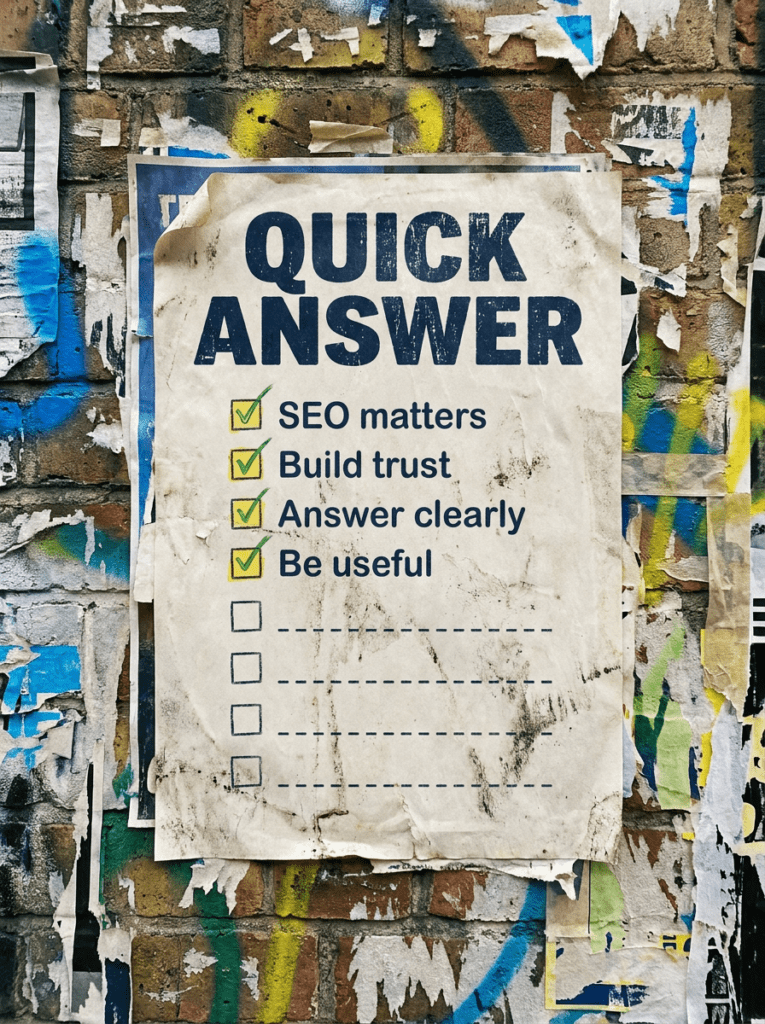
If you only have 20 minutes, start here. These are the key things to understand if you’re asking do i still need seo.
- Yes, SEO still matters when people use AI
- AI search still needs trusted sources, clear pages, and useful information
- Weak, generic content will struggle harder
- Service pages, product pages, and helpful guides still matter
- The goal is no longer just ranking. It is being found, trusted, and cited
If that already feels like a lot, do not worry. Below is the full process in the right order.
Not sure where to start?
The biggest mistake people make when they ask do i still need seo is treating AI like it replaces the whole search journey.
It does not.
People still search. They still compare. They still check websites. They still look for proof before spending money. AI just changes how some of those steps happen.
The better place to start is understanding what AI needs to surface your business properly: clear information, useful pages, strong signals, and content that actually answers the question.
If the answer is yes and the next question is who actually does the work, we have set out what a normal month of it looks like: what does an SEO agency do. And if the quotes you have been sent look steep for something this unglamorous, why is SEO so expensive breaks the number down.
Our full guide: Do I Still Need SEO
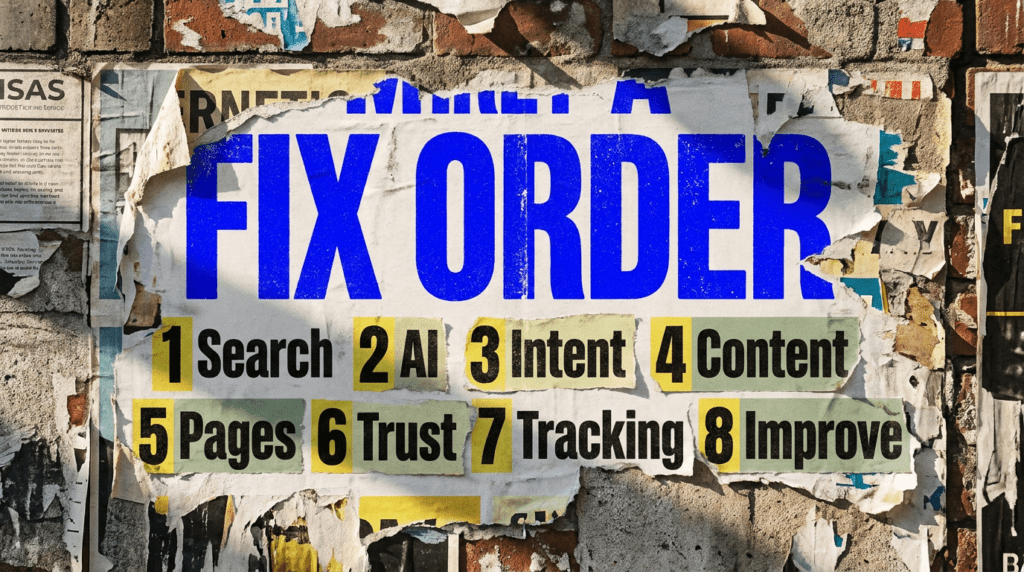
Work through this in order. The AI panic usually gets quieter once you separate actual changes from noisy LinkedIn theatre.
Step 1: Understand that AI still needs sources
AI search does not magically invent every answer from thin air. It uses systems, models, search indexes, and supporting sources to build responses.
Google says AI Overviews and AI Mode can surface relevant links to help people explore content, and its guidance says the same foundational SEO best practices still apply. That includes crawlable pages, useful content, internal links, page experience, visible text, accurate structured data, and up-to-date Business Profile or Merchant Center information where relevant.
- Your website still needs crawlable pages
- Important content still needs to be visible as text
- Internal links still help Google understand your site
- Business and product information still needs to be accurate
- Useful content still gives search systems something to work with
AI does not remove the need for a clear website. If anything, it punishes messy ones faster.
Step 2: Stop thinking only about blue links
Classic rankings still matter, but they are no longer the full picture.
A potential customer might now see your business through:
- A normal Google result
- An AI Overview
- AI Mode
- A Google Business Profile result
- A comparison-style answer
- A product result
- A review, forum, or third-party mention
That means SEO & AI work cannot just be “write a page and hope it ranks.” You need clearer answers, better supporting content, stronger proof, and cleaner information across the web.
Step 3: Keep focusing on search intent
AI has not made intent disappear. If anything, it has made intent more important.
People using AI tools often ask more detailed questions. They compare options. They ask follow-ups. They describe their situation in plain English. If your pages only target stiff keywords and never answer the actual buyer question, you will struggle.
- Know what people actually want from the search
- Answer the question clearly
- Match page format to the intent
- Avoid stuffing multiple intents onto one page
- Build pages that help people make decisions
This is where How to Do Keyword Research still matters. The goal is not just finding phrases. It is understanding the problem behind the phrase.
Step 4: Make your content useful enough to deserve visibility
AI has made average content easier to produce. That means average content is less impressive than ever.
Google’s helpful content guidance focuses on original, reliable, people-first content. It asks whether content provides original information, gives a complete answer, demonstrates real expertise, and serves an actual audience rather than existing mainly to manipulate rankings.
- Add real examples
- Show actual expertise
- Answer the question properly
- Avoid generic AI-style filler
- Make the page better than a quick summary
If your content sounds like it could have been written by any business in any industry, that is the problem.
Step 5: Strengthen your service pages
Guides and blogs help visibility, but service pages still do the commercial heavy lifting.
If someone finds you through AI, Search, or a helpful guide, they still need a clear place to check what you do and why they should trust you. Weak service pages quietly kill momentum.
- Explain what you offer clearly
- Show who the service is for
- Answer common objections
- Make the next step obvious
- Support claims with proof where possible
A useful guide can get someone interested. A strong service page helps turn that interest into an enquiry.
Step 6: Build trust signals outside your own site
AI-led search may pull from more than your own website. That means your wider footprint matters.
- Reviews matter
- Third-party mentions matter
- Clear business information matters
- Consistent profiles matter
- Useful content on other platforms can help
This is not about chasing every directory or spamming mentions everywhere. It is about making sure your business looks credible when search systems and real people check around.
Step 7: Watch how AI changes traffic, not just rankings
The uncomfortable bit is that AI-led search can change click behaviour.
A recent arXiv study found that AI Overviews appeared for 13.7% of tested trending queries and rose to 64.7% for question-form queries. The same study also found that AI Overview-cited domains can differ from traditional first-page rankings, which means AI search visibility may not always match classic ranking visibility.
- Monitor Search Console trends
- Watch pages that answer simple informational questions
- Track enquiries, not just traffic
- Look for changes in branded search
- Compare clicks against actual leads
The answer is not panic. The answer is better measurement.
Step 8: Improve the parts AI cannot fake
AI can summarise. It can compare. It can generate wording. But it cannot replace your actual experience, proof, process, results, and point of view.
- Add examples from real work
- Explain your process clearly
- Show useful detail
- Keep content updated
- Build pages around real customer questions
The businesses that win will not be the ones shouting “we use AI” the loudest. They will be the ones giving search systems and customers clearer reasons to trust them.
Common mistakes
These are the things that usually sit behind do i still need seo, especially when businesses react to AI news instead of looking at what actually changed.
- Assuming SEO is dead because AI search exists
- Ignoring service pages and commercial content
- Publishing generic AI-written blogs with no real value
- Forgetting that AI still needs useful sources
- Tracking rankings but ignoring enquiries
- Leaving business information vague or inconsistent
- Chasing AI hacks instead of fixing weak pages
DIY lane vs done for you lane
DIY lane:
If you want to answer do i still need seo for your own business, start by improving your core pages, answering real customer questions, tightening internal links, and tracking whether visibility turns into enquiries.
Done for you lane:
If you want the quicker route, we can help you build an SEO & AI strategy that keeps your business visible across Google Search, AI Overviews, AI Mode, and the places customers use to compare their options.
Related Guides on the wall
If you’re asking do i still need seo, these will help you tighten the parts of your visibility that still matter in AI-led search.
- Read AI Search Visibility if you want to understand how small businesses can get cited in AI-led answers
- Use How to Do Keyword Research to understand what your audience actually wants
- Read Service Page Checklist if your key commercial pages need to work harder
Do I Still Need SEO FAQs

Yes. AI has changed parts of the search journey, but businesses still need clear, useful, crawlable pages that help people and search systems understand what they offer.
It might for some simple informational searches, but not every search ends inside an AI answer. People still click when they need detail, proof, services, products, reviews, prices, or a business they can trust.
Focus on useful content, strong service pages, clear answers, internal linking, trustworthy proof, accurate business information, and tracking whether visibility turns into enquiries.
You need SEO & AI thinking, but you do not need nonsense hacks. Start with strong SEO fundamentals, then improve how clearly your site answers real questions and supports decision-making.
If you would rather someone handled this properly, our AI SEO packages build the SEO foundations first, then the AI-search layer on top. From £749/month.

Quick tip
Rather have us handle this instead of DIY-ing it? That is literally the job.

Straight talking marketing that gets results.
No pressure, no jargon. Just a clear look at what’s stopping your site from bringing in more enquiries.
Get my free website reviewLike this guide?
Tell Google you want more like it. One click, no sign-up, and FlyPost guides start showing up more often in your search results.
Add FlyPost as a preferred sourceTakes you to Google, then straight back here.